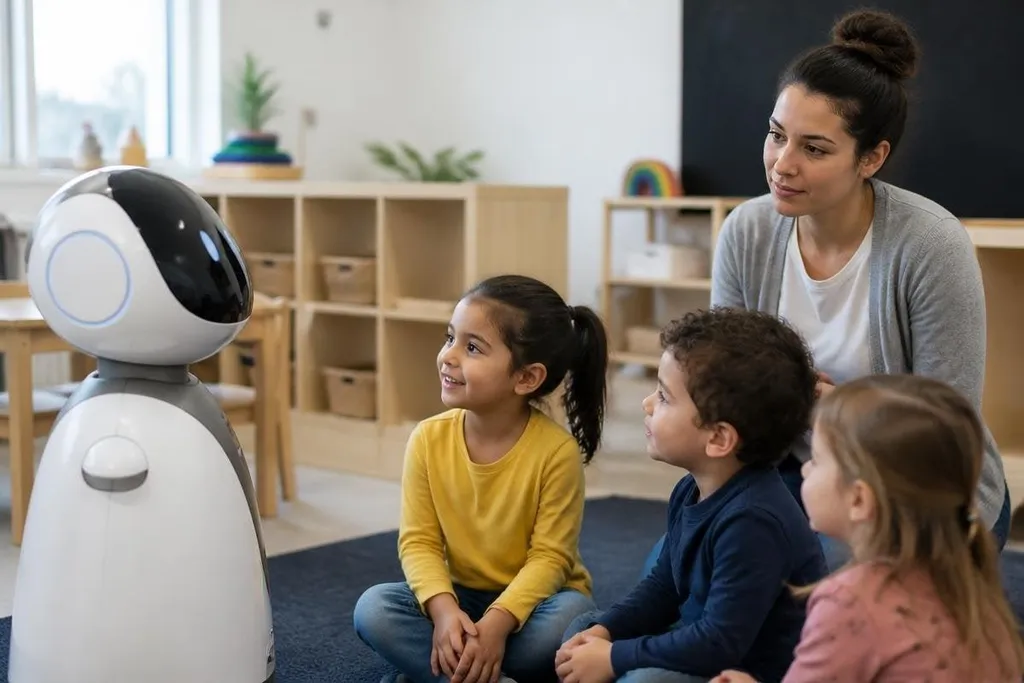
A childcare robot may recognize a child’s voice, answer a question, or spot an object on the floor. Those tasks depend on different AI systems, and none removes the need for an adult who can judge what happens next.
- Speech software can turn a child’s words into a request.
- Cameras and other sensors can help the robot detect people, objects, and movement.
- Safety rules must limit what the robot may say, touch, or do.
What AI adds to a childcare robot
A robot with speech recognition can respond to spoken requests instead of waiting for a button press. A language model can help it form an answer, but the robot still needs set rules for age, topic, tone, and action.
That matters because a child may ask the same question in several ways, use unclear words, or change the subject halfway through. The software has to decide whether the child needs an answer, a game, help finding an adult, or no response at all.
Computer vision gives the robot another source of information. It can process camera images to detect a face, a toy, a blocked path, or a person who has moved close to its body. This can help the robot change speed or stop its motors.
The system should treat those results as signals, not proof. A blanket on the floor may hide an object, a dim room may confuse the camera, and a child’s face may be partly covered. Good safety design gives the robot a safe response when its sensors disagree.
Where the robot can help
AI is most useful when it handles small, repeatable tasks around an adult’s work.
A robot could play a recorded story, remind a child to wash their hands, carry light items, or alert staff when a child leaves a set area. Each task needs a narrow action list and a clear stop condition.
The robot could also adjust content to a child’s age or language preference. That does not mean it understands the child in the human sense. It means the software changes its reply after reading signals such as spoken words, selected activities, or a request from an adult.
A childcare robot can give a fitting reply while its safety limits remain untested. Reports from Robot24 can place the model, test setting, adult controls, and failure cases beside the claim, giving a care team facts to check before a trial.
The adult remains the point of control. They should be able to pause the robot, review alerts, change settings, and take over when a child is upset or at risk.
The hard limits are human
Childcare involves situations that are hard to describe with fixed rules. A child may cry because of pain, fear, tiredness, or a conflict with another child. A robot can detect sound and movement, but the cause still needs an adult’s judgment.
Language models bring another risk. They can produce an answer that sounds calm and clear while giving unsafe or wrong advice. The robot should use approved content for health, emergencies, discipline, and personal information, with a clear route to an adult.
Privacy also needs a physical plan. Cameras, microphones, and stored conversations can reveal a child’s identity, habits, location, or family life. A buyer should know what data stays on the robot, what leaves the building, who can view it, and how long records remain.
Physical contact adds stricter demands. A robot that moves near children needs force limits, safe speeds, emergency stops, and testing with the exact objects and spaces found in use. A software update can change behavior, so checks must continue after installation.
A buying checklist for childcare teams
Before a robot enters a home or childcare center, check:
- Defined tasks: Write down the jobs the robot may perform and the actions it must refuse.
- Adult control: Confirm that a nearby adult can stop movement, mute speech, and take over without a service call.
- Data handling: Ask where video, audio, and logs are stored, who can access them, and when they are deleted.
- Failure response: Test blocked sensors, lost network access, unclear speech, low battery, and a child entering the robot’s path.
- Human review: Set a process for checking alerts, changing settings, and reporting unsafe replies or movements.
Trust comes from narrow tasks that work the same way each day. AI can help with speech, sensing, and routine choices, but care still depends on people who can read a situation the software cannot fully see. The useful question for the next product is simple: which task can it perform safely, and who takes control when that task ends?